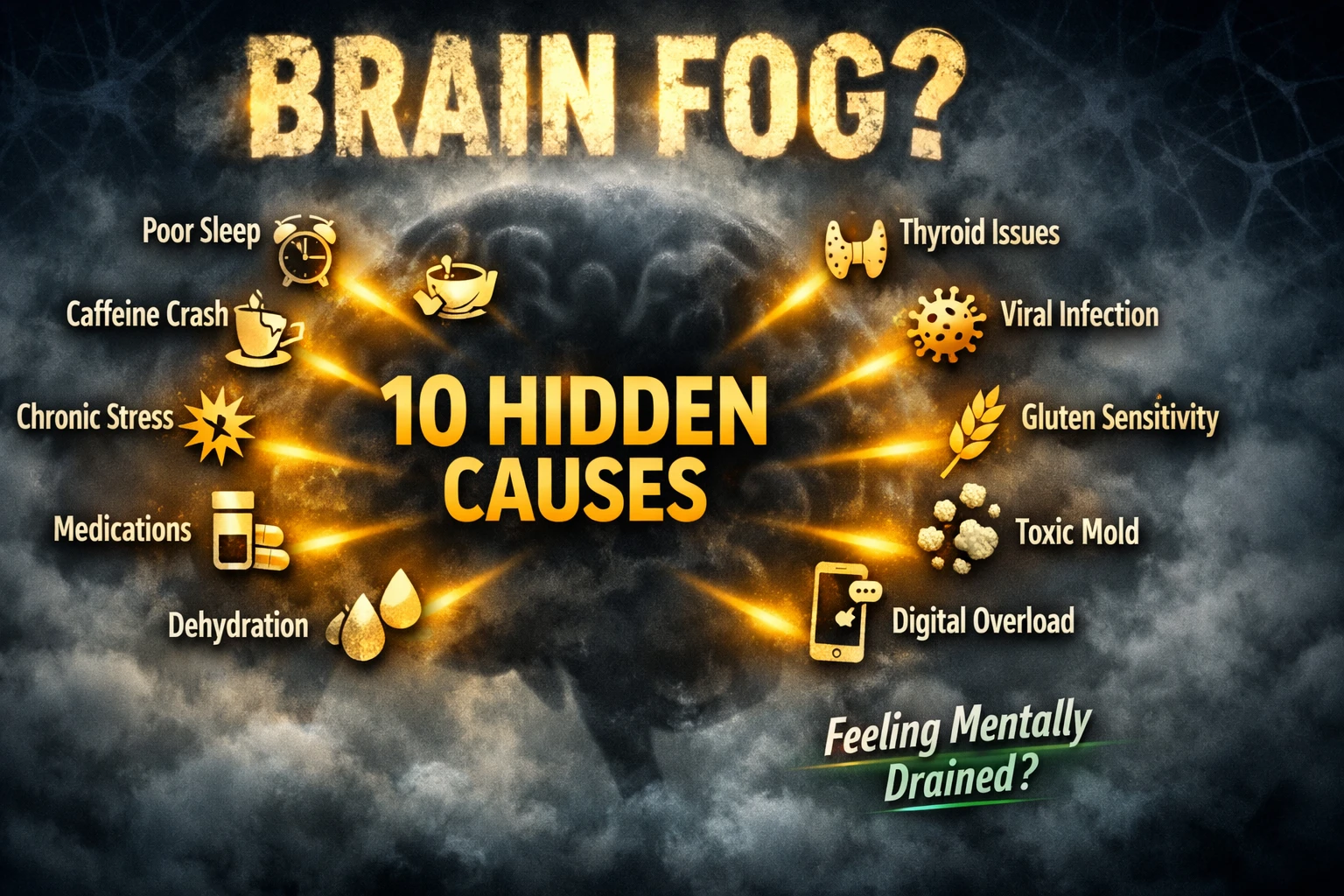
What Causes Brain Fog? 10 Hidden Reasons You Feel Mentally Drained
Brain fog isn’t a medical diagnosis — it’s a symptom people describe as confusion, forgetfulness, lack of focus, or “mental cloudiness.” Understanding what triggers it is the first step toward clear thinking and better cognitive health.
This guide answers the most searched questions like:
What exactly is brain fog?
Why do I feel mentally drained even after sleep?
Which hidden causes are often overlooked?
Table of Contents
- Poor Sleep Patterns
- Nutrient Deficiencies
- Chronic Stress and Cortisol
- Hormonal Imbalances
- Inflammation and Immune Response
- Sedentary Lifestyle
- Dehydration
- Side Effects of Medications
- Underlying Health Conditions
- Environmental Toxins
- FAQs
1. Poor Sleep Patterns
Sleep is when the brain clears metabolic waste, consolidates memory, and restores cognitive function. Inadequate or disrupted sleep leaves neural circuits sluggish.
- Irregular sleep schedules
- Sleep apnea
- Insomnia or frequent waking
2. Nutrient Deficiencies
Essential nutrients fuel neurotransmitters and energy metabolism. Low levels can cause sluggish cognition and fatigue.
- Vitamin B12 deficiency
- Iron deficiency (anemia)
- Low omega-3 fatty acids
- Vitamin D insufficiency
Blood tests can identify these easily.
3. Chronic Stress & Elevated Cortisol
Stress triggers cortisol release. Over time, high cortisol impairs memory, attention, and mood regulation.
- Work pressure
- Emotional stress
- Chronic anxiety
4. Hormonal Imbalances
Changes in hormones influence brain chemistry and energy levels.
- Thyroid disorders (hypothyroidism)
- Perimenopause / menopause
- Adrenal fatigue patterns
5. Inflammation & Immune Response
Systemic inflammation can cross the blood–brain barrier and affect neural signaling.
- Autoimmune conditions
- Chronic infections
- Food sensitivities
6. Sedentary Lifestyle
Physical activity boosts blood flow to the brain and releases neurotrophic factors that support learning and memory.
- Long sitting hours
- No exercise routine
- Low daily movement
7. Dehydration
Even mild dehydration affects attention, short-term memory, and mood. Many people underestimate fluids needed daily.
- Not enough water intake
- Excess caffeine without hydration
- Heat exposure
8. Side Effects of Medications
Several prescription and over-the-counter medications can cause cognitive fog as a side effect.
- Antihistamines
- Some pain relievers
- Blood pressure meds
- Sleep aids
9. Underlying Health Conditions
Certain chronic health issues can contribute to brain fog and fatigue.
- Diabetes (blood sugar swings)
- Fibromyalgia
- Chronic fatigue syndrome
- Gut dysbiosis
10. Environmental Toxins & Lifestyle Exposures
Toxins can disrupt neurological function and energy.
- Air pollution
- Heavy metals exposure
- Pesticide residues
- Excess screen light at night
Frequently Asked Questions
What is brain fog exactly?
Brain fog refers to a feeling of mental cloudiness, forgetfulness, and lack of sharp focus.
Can brain fog go away on its own?
Yes, especially if caused by reversible factors like poor sleep or dehydration. Persistent fog should be medically evaluated.
When should I see a doctor?
If fog is sudden, severe, or accompanied by weight loss, numbness, or speech problems, seek medical help.
Final Thoughts
Brain fog has many triggers — from lifestyle and nutrition to hormonal and environmental factors. The good news is most causes are manageable with targeted changes. Prioritizing sleep, hydration, nutrients, stress control, and physical activity supports both body and mind.
Every brain functions best when internal systems are balanced. Taking small steps each day can dramatically improve clarity and mental energy.