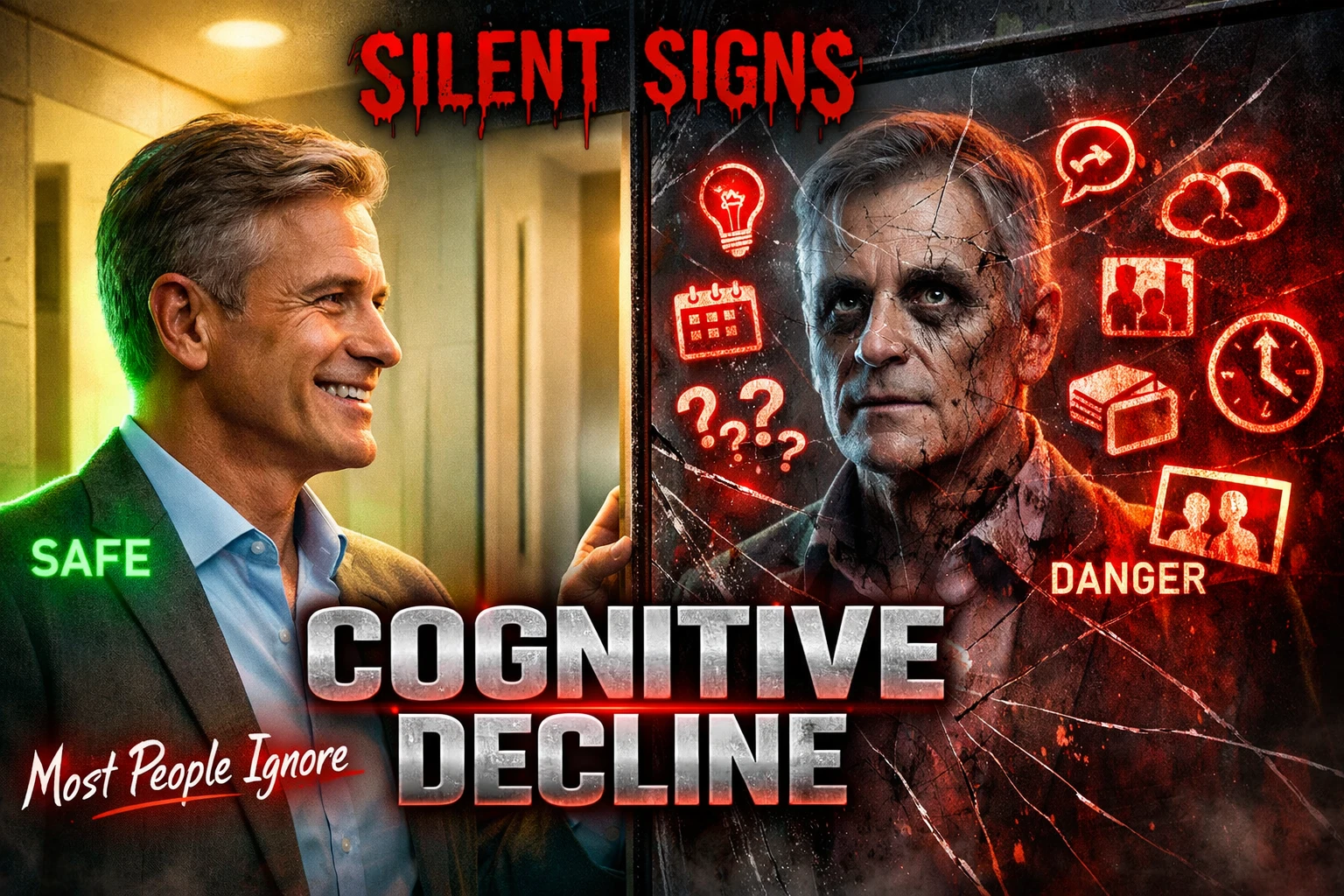
The Silent Signs of Early Cognitive Decline Most People Ignore
Forgetting words, losing focus, or feeling mentally slower is often dismissed as stress or aging. But science shows these can be the earliest signals of cognitive decline — long before dementia or Alzheimer’s appears.
The problem is that early cognitive decline does not announce itself loudly. It whispers through subtle changes that most people ignore.
Why Early Cognitive Decline Is Often Missed
More than 7 million adults live with mild cognitive impairment (MCI), yet over half are never diagnosed. The reason is simple: early decline looks like everyday forgetfulness.
However, research shows that people who notice subtle mental changes — called subjective cognitive decline — have more than double the risk of developing dementia later.
1. Memories Become Fuzzy Instead of Missing
Instead of forgetting events completely, you may remember them without details. You know something happened, but can’t recall who was there or what was said. This loss of memory precision is one of the earliest neurological changes.
2. You Lose Your Train of Thought More Often
Needing to reread paragraphs, losing conversation threads, or forgetting what you were about to say can indicate declining working memory and attention networks.
3. Simple Decisions Feel Overwhelming
Struggling to choose what to wear, eat, or plan may reflect reduced executive function — the part of the brain responsible for decision-making.
4. Familiar Places Start Feeling Confusing
Momentary disorientation on familiar routes is not normal aging. Spatial memory decline is one of the strongest early warning signs.
5. Mood and Personality Shift
New anxiety, irritability, apathy, or social withdrawal often appear before memory loss. These changes come from declining emotional regulation in the brain.
6. Routine Tasks Become Harder
Cooking, paying bills, or managing daily life suddenly takes more effort. This reflects weakening neural pathways that once made these tasks automatic.
7. You Struggle to Focus for Long Periods
Attention span declines early. You may zone out, forget conversations, or feel mentally tired faster than before.
Why Early Detection Matters
Modern research shows that lifestyle changes and targeted brain support can slow cognitive decline — especially when started early.
Exercise, nutrition, sleep quality, stress control, and antioxidant support all protect neurons from degeneration.
What You Can Do Now
- Get a cognitive screening (MoCA or MMSE)
- Exercise regularly
- Follow a Mediterranean or MIND diet
- Optimize sleep and manage stress
- Support brain cells with targeted nutrients
Neuro Fortis PRO™ was designed to support memory, focus, and neural protection at the cellular level. It combines antioxidants, circulation support, and neuro-active botanicals used in modern cognitive research.