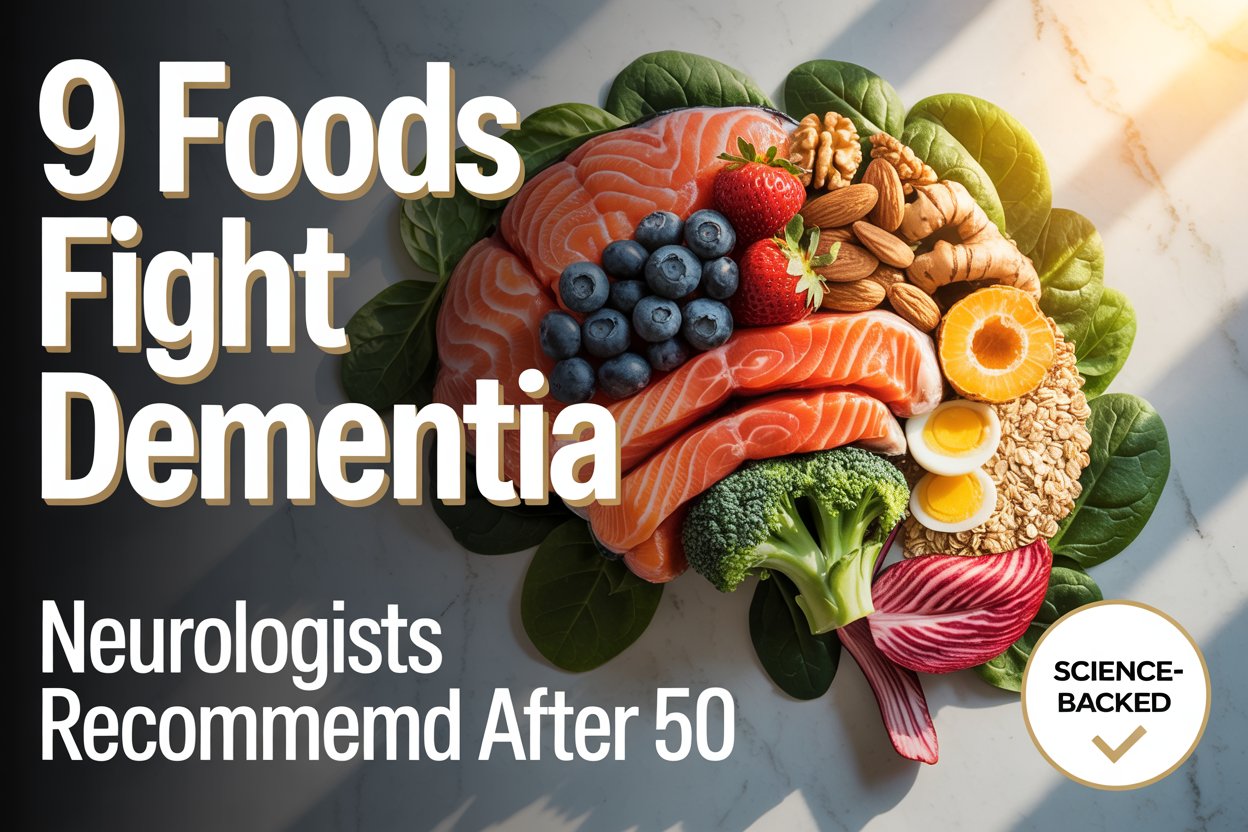
9 Foods That Fight Dementia: What Neurologists Recommend After 50
If you’ve ever walked into a room and forgotten why you were there, you’re not alone. After 50, these moments happen more often — but they don’t have to get worse.
Neuroscience now confirms that what you eat has a direct, measurable impact on memory, focus, and long-term brain health. In fact, dietary interventions alone can improve cognitive function by up to 25% in two years — even in people with genetic risk.
Why Diet Matters More After 50
Your brain uses 20% of your body’s energy. As we age, blood flow slows, inflammation rises, and oxidative damage accumulates — all of which accelerate cognitive decline.
But certain foods contain compounds that:
- Reduce inflammation
- Neutralize free radicals
- Improve blood flow to the brain
- Stimulate neuroplasticity
- Protect memory neurons
1. Fatty Fish (Salmon, Sardines, Mackerel)
Fatty fish is the richest source of DHA, the primary structural fat of your brain. DHA supports memory formation, learning speed, and neural signaling.
Studies show omega-3 intake reduces Alzheimer’s risk and slows cognitive decline.
Target: Two servings per week.
2. Blueberries
Blueberries are packed with anthocyanins — antioxidants that cross the blood-brain barrier and protect memory centers.
Daily blueberry consumption has been shown to reverse 2–3 years of age-related memory loss.
3. Leafy Greens (Spinach, Kale, Swiss Chard)
Leafy greens provide vitamin K, folate, and lutein — nutrients linked to slower brain aging.
Older adults who eat greens daily perform like people 11 years younger on memory tests.
4. Walnuts
Walnuts contain omega-3s, vitamin E, and polyphenols that reduce brain inflammation and oxidative stress.
One handful per day supports memory and learning.
5. Broccoli & Kale
These vegetables are packed with vitamin K and sulforaphane — compounds that activate brain-protective enzymes.
They support neuroplasticity and long-term memory preservation.
6. Mixed Berries
Raspberries, strawberries, blackberries, and cherries add diverse polyphenols that protect neurons and slow cognitive decline.
7. Whole Grains
Your brain runs on glucose — but it needs steady delivery. Whole grains prevent blood sugar crashes that impair cognition.
They also provide B-vitamins essential for neurotransmitter production.
8. Eggs
Eggs are one of the best sources of choline — the building block of acetylcholine, the memory neurotransmitter.
Low choline is strongly linked to accelerated cognitive aging.
9. Turmeric
Curcumin, the active compound in turmeric, reduces brain inflammation and helps clear Alzheimer’s-related plaques.
It also boosts BDNF — the protein that grows new brain cells.
The Brain Diet That Works
Neurologists recommend the MIND Diet — a blend of Mediterranean and DASH diets.
Research shows people following it have up to a 53% lower risk of Alzheimer’s disease.
Food builds the brain — but targeted nutrition protects it.
Neuro Fortis PRO™ combines antioxidants, circulation support, and memory-supporting botanicals to complement a brain-healthy diet.